By Amber Crooks, Senior Environmental Policy Advisor, Conservancy of Southwest Florida
On August 13, 2025, the Florida Fish and Wildlife Conservation Commission (FWC) provided the final vote needed to establish a series of new rules pertaining to hunting Florida black bears, a unique subspecies of bear found here in the Sunshine State. This vote was effectively the last opportunity for members of the public to address the hunting issue before the appointed-FWC Commissioners, as the rules they passed punt future hunt decisions to the Executive Director and would not require a public meeting.
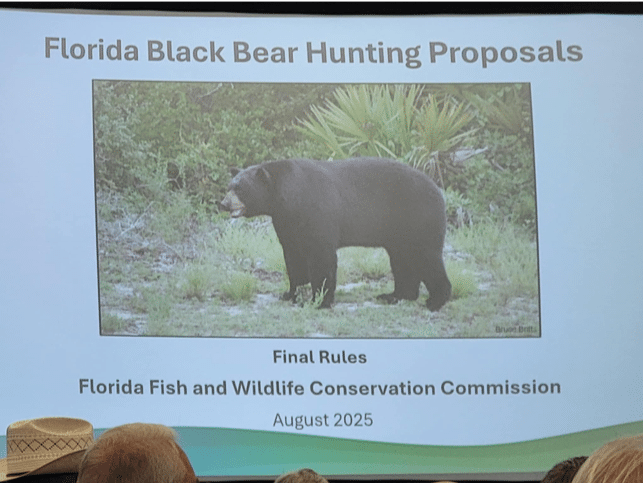
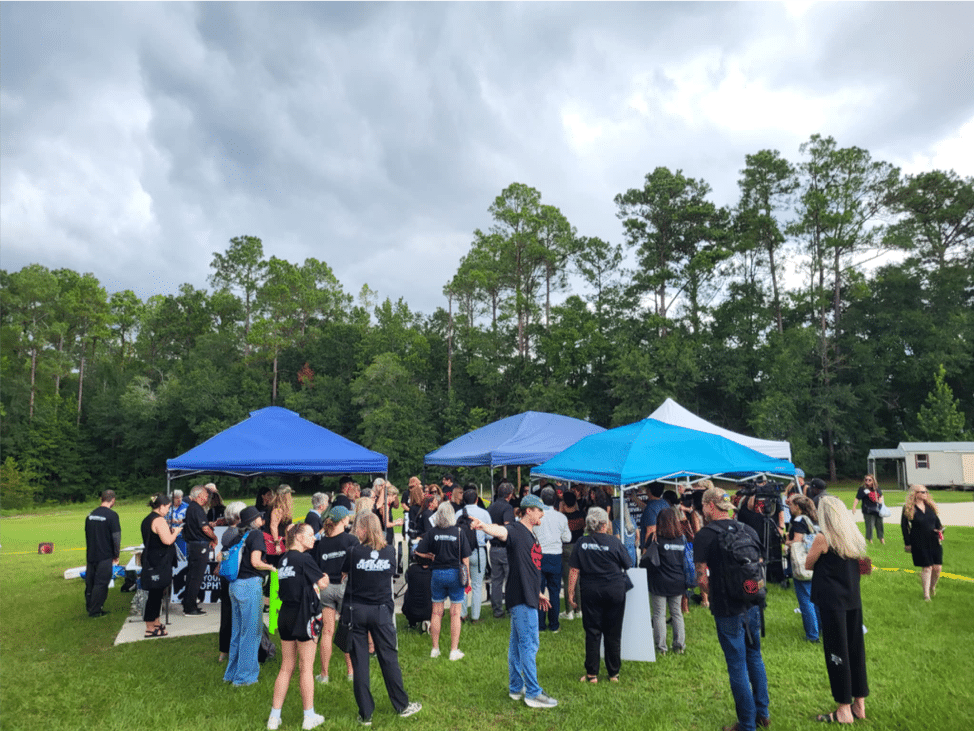
Despite the hours of input and testimony at the Havana, Florida meeting, the Commissioners asked little to no questions about the implications of the hunt, nor did they respond to new information presented during the meeting.
The Conservancy of Southwest Florida was one of nearly 170 speakers who spoke about the Florida black bear hunt at the meeting held in Havana, Florida, just north of Tallahassee. We raised concerns about how a supplemental private lands bear hunt program, which will begin in 2026, could further strain the bear population.
Our presentation included an ArcGIS map analysis of the 25 to 30 landowners just in one of the four designated hunt areas that potentially could apply – each getting a tag to hunt one bear on their property if approved. In our comment letters and other input provided to the FWC, we also raised concerns that the hunt will detract from the top priority to protect both people and bears: reducing human-bear conflicts caused by unsecured trash and other bear attractants. We expressed concerns with how the bear hunt could impact the imperiled subpopulation of bears in Glades County, just north of where the hunt has been authorized. And we made reasonable requests to the agency to delay consideration of the bear hunt until scientific data would become available on the population and demographics – studies that are currently underway and nearly complete.
Now that the FWC has forged ahead with the controversial and unpopular bear hunt rules, we ask the agency to commit to the following actions in light of the continued concerns for the health of the Florida black bears population:
- Direct FWC staff to complete an updated Waste Management and Attractants Reduction Action Plan, and reinstate the FWC legislative budget requests to funnel funds to address the critical issue of human-bear conflicts.
FWC staff has testified that available natural habitat is plenty to sustain the current number of bears, so there isn’t a biological reason to cull the bear population at this time. Further, the bear hunt will likely not target bears that have become used to human sources of food and have become a nuisance within developed areas. The agency will need to continue its work educating people about our responsibility to keep these types of attractants away from wildlife.
While FWC is already doing good work addressing human-bear conflicts, more needs to be done. The agency should develop an action plan that not only increases their field work in problem areas, but also ignites action from the cities and counties on how to secure trash. This should include working with cities and counties to revise contracts with waste providers to implement more bear-friendly practices.
- Work with your Law Enforcement division to increase enforcement of the state’s bear feeding rules, including providing notices and fines for intentionally or negligently allowing human sources of foods to be accessible to bears.
While there are laws on the book, FWC’s Law Enforcement has done less enforcement over the last three years of these important rules. As reported to the Conservancy, there were zero law enforcement notices in the South Unit in 2023 and 2024, despite continued reports of bears in trash cans, draw into neighborhoods or residential areas by unsecured food.
- Commit to a public review of hunt quotas and methodologies once scientific studies are completed.
As the FWC researchers complete their population studies over the next few years, commit to provide a public meeting agenda item for discussion on how this new information may impact the agency’s ongoing bear hunts. We understand that the abundance estimate for the South Unit in our region will be done by 2027. A public meeting opportunity should be scheduled for that time to ensure that the ongoing hunts are not placing our bear population at risk. If growth rates are less than what the agency guesses they are at today, future hunts should immediately be canceled and subject to further review.
- Increase protection of bear habitat through FWC’s technical assistance on development permit reviews, roadway permit reviews, and through consultation with municipal planning entities.
Comments made by the FWC Chairman during the August 13th meeting seemed to indicate that the agency didn’t have a nexus with loss of bear habitat to development. FWC has the opportunity on every state-level permit (for example, Environmental Resource Permits requested through South Florida Water Management District or Florida Department of Environmental Protection) to provide “technical assistance” on developments, roads, mines, and other proposed impacts in bear habitat.
Over the years, and at our request, FWC has improved its commenting practices, but that’s not enough. FWC has a duty under Florida law at 68A-4, to provide its expertise to “minimize and avoid potential negative human-bear interactions or impacts of land modifications on the conservation and management of black bears.”
FWC should ramp up their commenting on development, particularly as it relates to protecting bear habitat, corridors, and the need for connectivity between healthy populations and those that are at risk for extirpation/local extinction.
- Convene a “recovery” task force specifically dedicated to linking healthy bear populations with the at-risk subpopulations that are at risk for local extinction.
This issue has always been the number one reason the Conservancy of Southwest Florida has opposed a bear hunt for the last ten years. The bear population in the Glades-Highlands County area is dwindling, and connectivity to the South Unit (Hendry, Collier, Lee Counties) is desperately needed. In the 1990s, there was a connection between these two bear subpopulations, but today, genetic exchange is limited, and the population there is estimated at less than 100 bears.
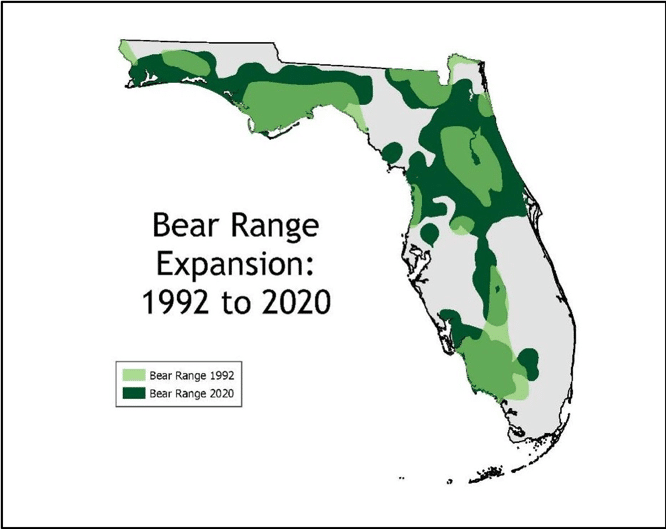
Yet, the hunting is now authorized to take place just miles away, taking bears that are, instead, needed to supplement this imperiled bear subpopulation.
While we appreciate that the FWC biologists have been researching this issue for years, the agency needs to convene a recovery task force of experts, partners, and non-profit organizations to implement the things necessary to save this imperiled subpopulation of bears.
Thank you to the supporters who spoke for the bears via our Take Action alert. We will continue to work with FWC on how Florida’s black bears can be protected, despite the upcoming bear hunt. Read our comment letter here.