Written by Lauren Barkley | von Arx Wildlife Hospital Rehabilitation Manager
The von Arx Wildlife Hospital is part of and located at the Conservancy of Southwest Florida. Call 239-262-2273 for wildlife assistance. Our wildlife hospital is open 365 days a year from 8am to 6pm. The Conservancy of Southwest Florida is an environmental conservation nonprofit with a Nature Center open Tuesday through Saturday from 9:30am to 4pm. The Conservancy and the wildlife hospital are located at 1495 Smith Preserve Way in Naples, FL.
In the spring and summer months, we admit hundreds of baby animals into our wildlife hospital. In 2024, 1,868 babies were admitted out of our 3,821 total animal admissions for the year. Here are some tips on what to do if you find an injured, orphaned and/or sick baby animal:
General Tips
Never try to feed baby wildlife. Google is misleading. It is full of false information and these animals are super vulnerable. They need to see an expert who can provide them with the proper care. Feeding babies incorrectly is extremely dangerous to their health and can cause them to aspirate by inhaling milk, water, or food into the lungs. Babies that are weak, injured, or forced to take food and water may not be able to swallow or process an inappropriate food, which is dangerous. Aspiration can lead to life threatening complications such as pneumonia if untreated or necessary treatment from a veterinarian comes too late. If you find an injured baby, please call our wildlife hospital and do not run to the pet store for milk and food. Make getting them to our wildlife hospital your priority and get here as soon as you can. Our dedicated skilled rehabbers will ensure the baby is stabilized and provide them with everything they need to thrive.
Never try to raise baby wildlife at home. Wild animals should not be treated as pets and need to stay wild to ensure their survival. Imprinting and habituation to humans is possible when not taking proper precautions raising wildlife. Always contact a local wildlife rehabber so they can get the proper socialization of their own kind.
Sometimes wildlife do not always need your help. Their parents do a great job and it is important for them to be raised wild.
Grey squirrels
If you find a grey squirrel on the ground, bring the baby to the hospital. Baby grey squirrels nest in the trees and if you find one on the ground, the chances that they have fallen are high. Do not offer food or water; just locate your nearest wildlife center so professionals can see them. Most likely the baby is in serious pain from falling and the last thing they need is food instead they need pain medication and to be seen by a veterinarian to make sure there are no broken bones or internal injuries.
In addition, if a young squirrel is coming up to you, they are probably orphaned. Wildlife should not be friendly, so if they are coming up to you they are probably hungry and desperate. Please contain the young squirrel and bring to the wildlife hospital so it can receive the proper nutrition. With animals that are thin or emaciated it is important that they receive necessary fluids and careful monitoring before offering food. Feeding them too much too soon can actually cause life threatening complications, so please do not feed them.
We admitted 78 gray squirrels in 2024.
Songbirds
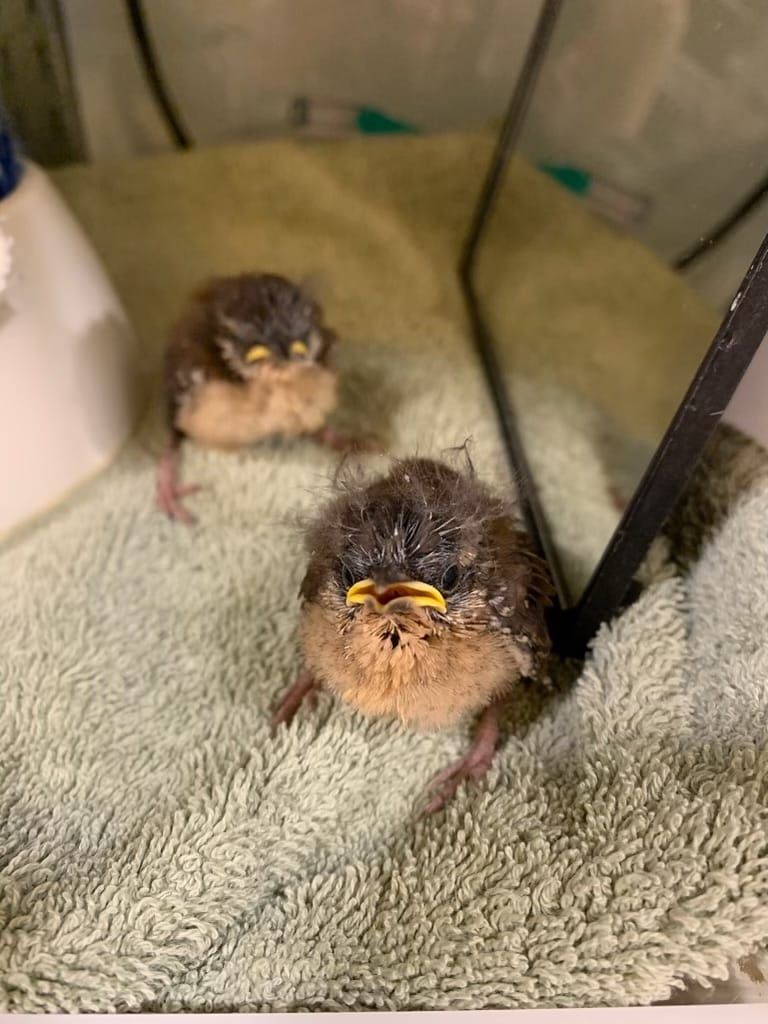
Baby songbird young: If you find a nestling baby bird on the ground, please bring it to the wildlife hospital. Nestling baby birds are naked or have downy/pinfeathers. They are too young to be out of the nest and need to be monitored for bruising and internal injuries after the fall. If you are unsure, you can always take a photo and send it the wildlife hospital and from there the staff can age the bird.
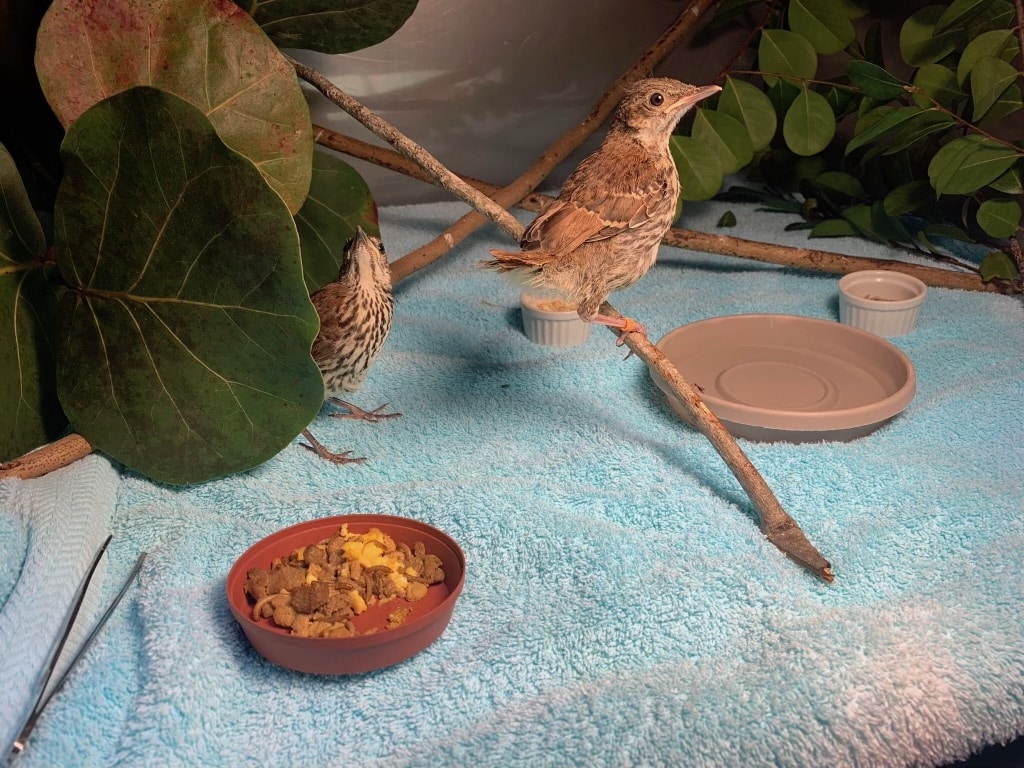
Baby songbird fledge: Most likely if you find a fledge on the ground they do not need to come into the wildlife hospital unless there is an obvious sign of injury. Fledging is an important stage where they are hopping around learning how to fly and eat on their own with their parent’s guidance. If you are unsure if a baby bird is truly a fledge please take a photo and the wildlife staff can age the bird.
We admitted 554 baby birds in 2024.
Eastern cottontail
If you find a bunny nest, do not touch it. It is important that you do not disturb the nest because mom will realize the nest has been disturbed and be cautious of returning.
In addition, the mom does not hang out near the nest so you cannot assume baby rabbits are orphaned. Mom feeds at dusk and dawn and is very secretive.
If you are unsure if mom is coming, you can set twigs on top of the nest making an X. Check the next day around 11am and if they are disturbed then mom is coming. A sign of an orphaned rabbit is one that will not stay in the nest.
If you find a nest that has been disturbed and a sibling is dead, the whole nest needs to come to the wildlife hospital. If your dog digs up the nest or a cat brings a rabbit to your door or is in their mouth, the bunny needs to come in.
We admitted 497 eastern cottontails in 2024.
Opossums
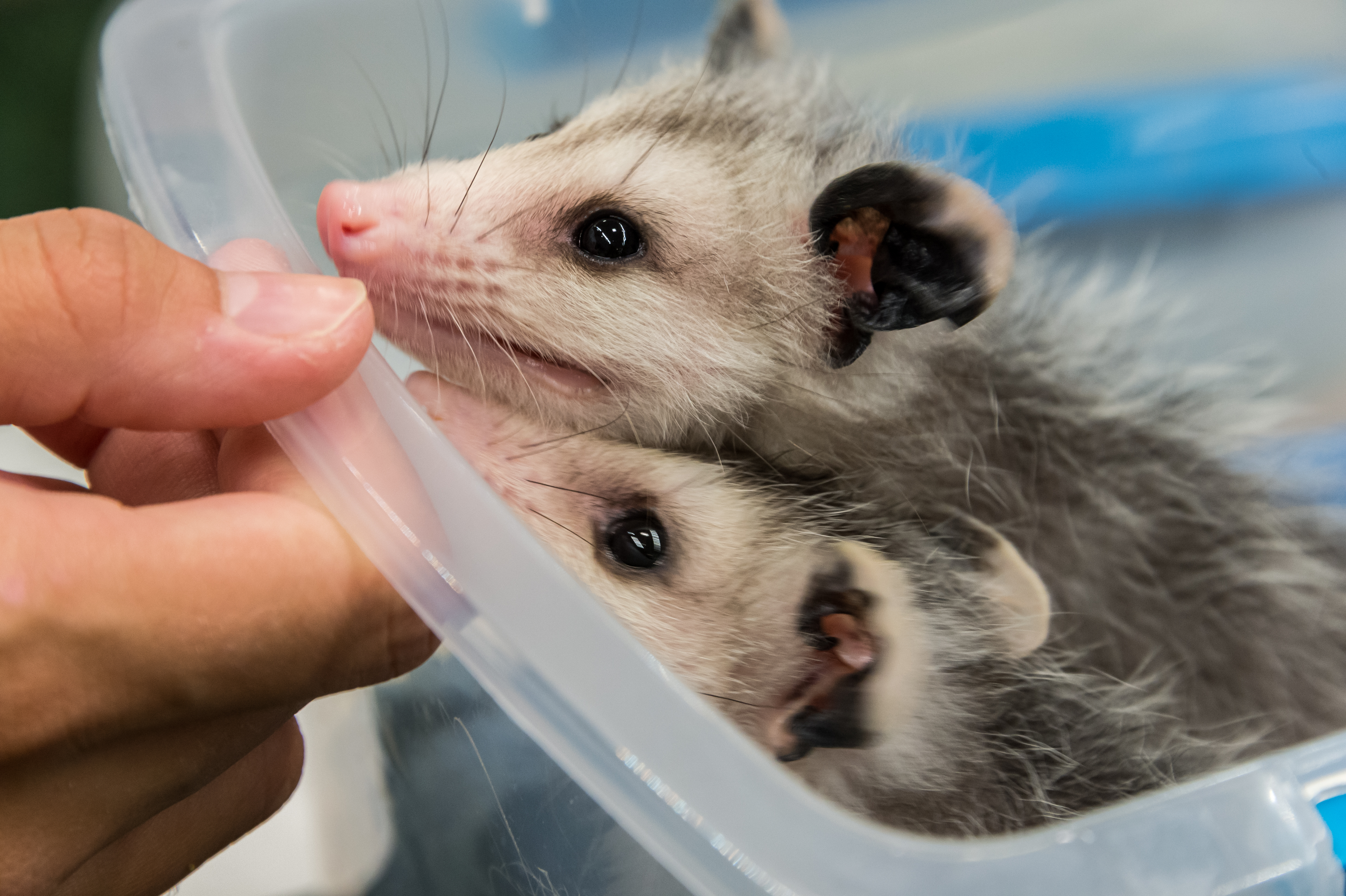
Opossums are the only marsupial in North America. Just like many marsupials, young joeys should be on their mom or in the pouch. If you find a single or group of young joey opossums by themselves then they need to go to the nearest wildlife hospital. The most common reason why joeys are admitted to the hospital is that that mom was hit by a car.
If you find a dead opossum, please check to see if there is a pouch. If there are babies in the pouch, we advise you to not remove the babies from the pouch but to bring the mom and babies in so we can also assess the mother for trauma or poisoning, but also remove the babies safely.
In 2024, we admitted 104 baby opossums.
Fawns
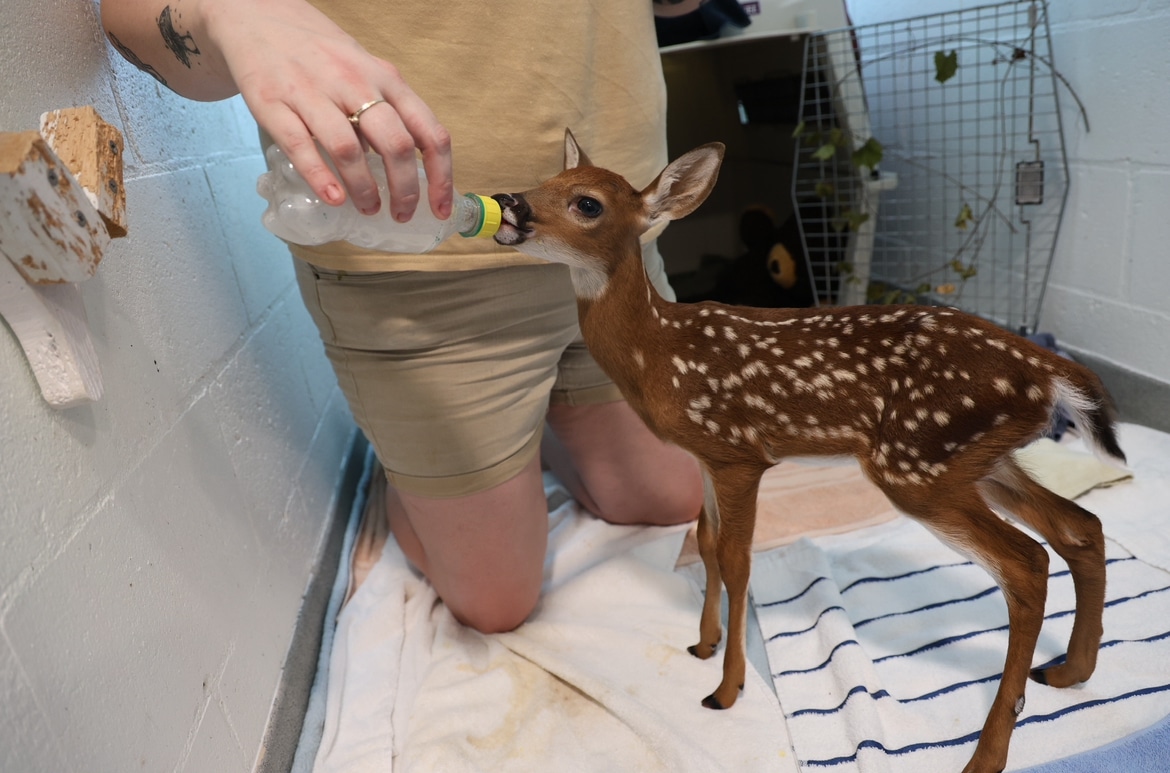
If you ever see a fawn alone, do not be alarmed. Fawns spend most of their time alone hiding silently in the grass in between feedings from mom. This is actually their best defense from predators at their young and vulnerable age.
Fawns have no scent and a unique coat with spots to help them camouflage. If you think a fawn is orphaned, please call us immediately and do not touch them. We have professional rehabbers that can ask you the right questions to determine if the fawn is truly orphaned. By touching them, you are causing more harm than good. First, you are adding your scent to them. Second, you could spook them and cause them to run into danger causing them to get hurt or become separated and lost from mom. Please speak with a professional rehabber before taking matters into your own hands.