The von Arx Wildlife Hospital at the Conservancy of Southwest Florida admitted 302 wildlife patients and released 65 animals back to the wild in the month of July.
Call 239-262-2273 for wildlife assistance. We are located at 1495 Smith Preserve Way in Naples, FL. Open every day from 8am to 6pm.
This past week, our wildlife hospital admitted 5 different native wildlife species that were kept as pets. The patients included a Florida box turtle, chicken turtle, two raccoons, and a fawn.
Florida Box Turtle
The Florida box turtle was kept as a pet for 3 years and was in another person’s care prior to that. While the history of the box turtle is unknown, based off of our full exam, our professional wildlife rehabilitators could tell it was receiving improper care.
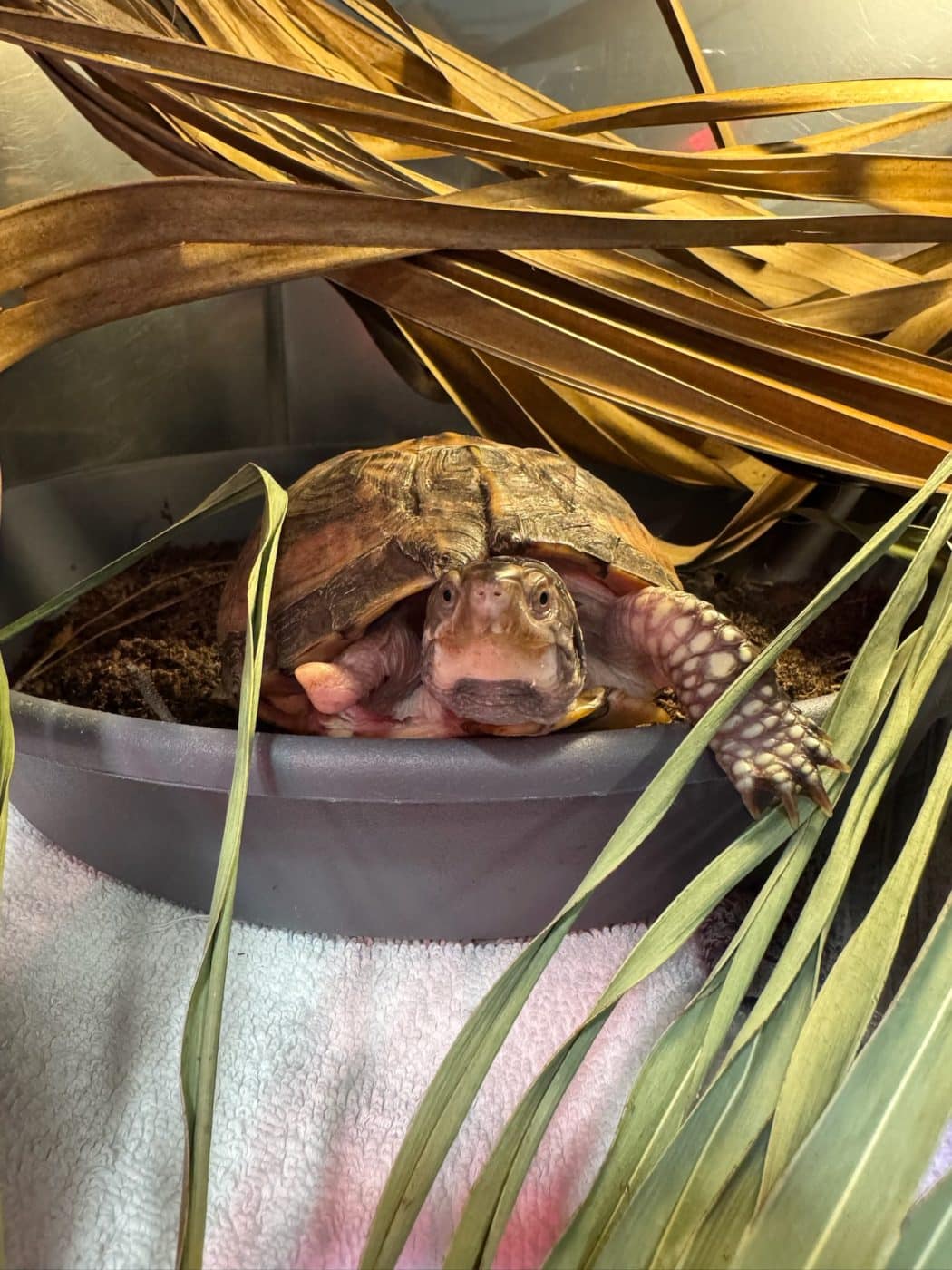
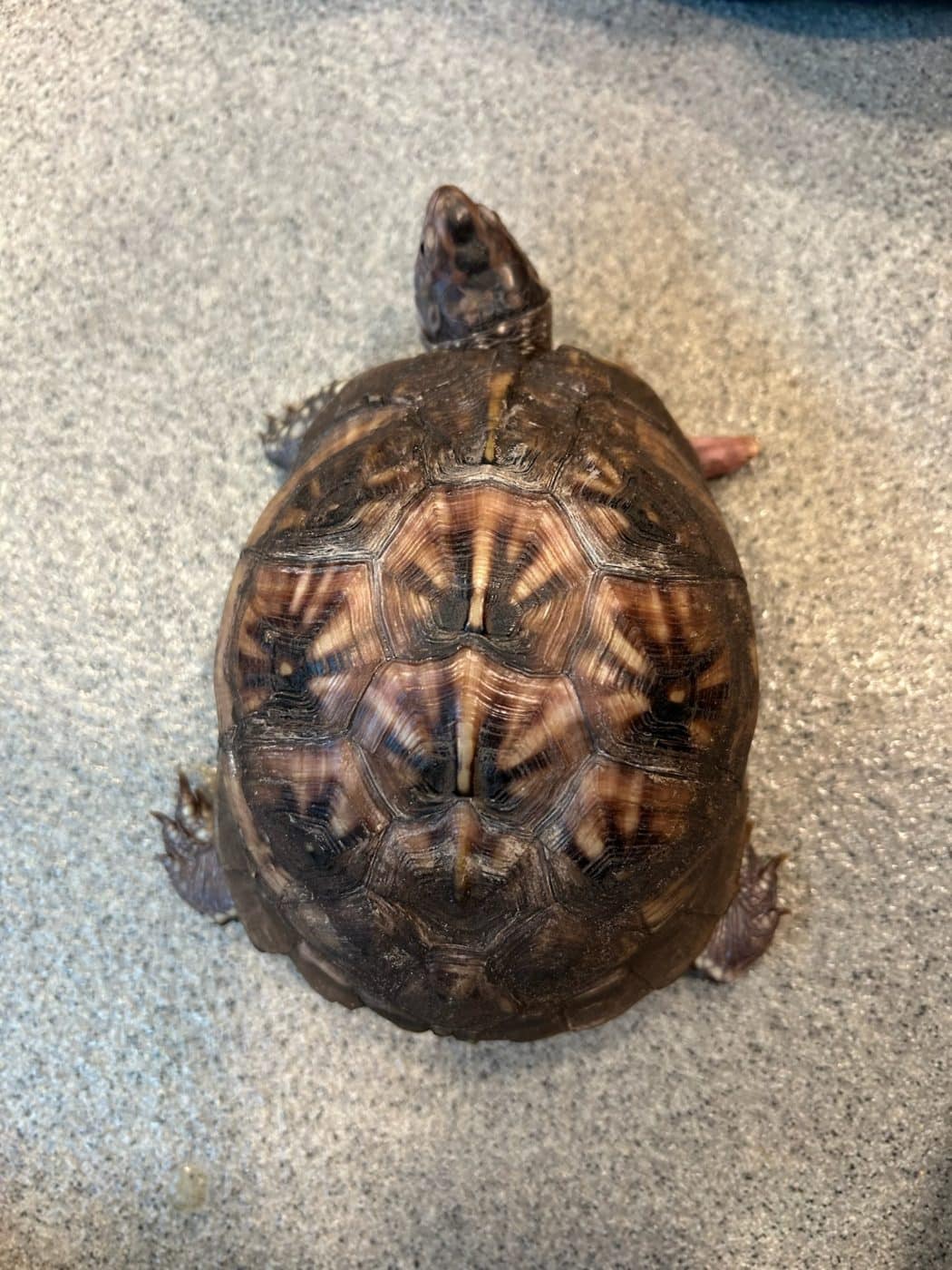
The Florida box turtle had a pink coloration to the skin and the shell was starting to flake. Turtles are ectothermic, which means that they rely on external sources to regulate body temperature. By creating an environment that allows them to maintain their body temperature, this allows them to properly digest and helps with their overall health. Also, by providing a proper diet you are ensuring that the shell is able to develop properly. Based off of the exam and previous history that was given, the wildlife hospital staff could assume the box turtle did not receive the correct care.
Never attempt to care for a wild animal. It is illegal to possess injured, sick or orphaned wildlife without appropriate state and federal permits. These laws are in place to ensure wild animals receive care from professionals who understand their specific nutritional, medical and husbandry requirements.
Fawn
Another species that was kept as a pet was a fawn.
Earlier this week, we received a phone call from the rescuer reporting that they had found a fawn three days ago and the mom has not come back. After asking more questions, it was revealed that they were doing supplemental feedings throughout the day. This is problematic because the rescuer interfered with the fawn’s normal diet, bonding time with the parent, and introduced a relationship to humans. Adult female deers will leave their fawn out in a safe area for hours while she goes to graze. If there are any disturbances during this time period, this could cause the mother to become wary of the situation and suspect danger.
Since we knew the rescuer was already feeding the fawn, we asked if they could bring the animal in knowing that there has been interruptions and the mom would not be coming back. We also wanted to make sure the fawn was digesting properly because of the supplemental formula that was given to him.
When we asked the rescuer to bring in the animal, they were unable to bring it in that day so we asked for a photo so that we could see the size of the fawn and prepare our Critter Courier for pickup.
When we received the photo, we realized the fawn had a collar and leash around his neck. After talking with them again, they said that they had the fawn for three weeks and it has been living outside on a leash. We were able to send a Critter Courier for pick up.
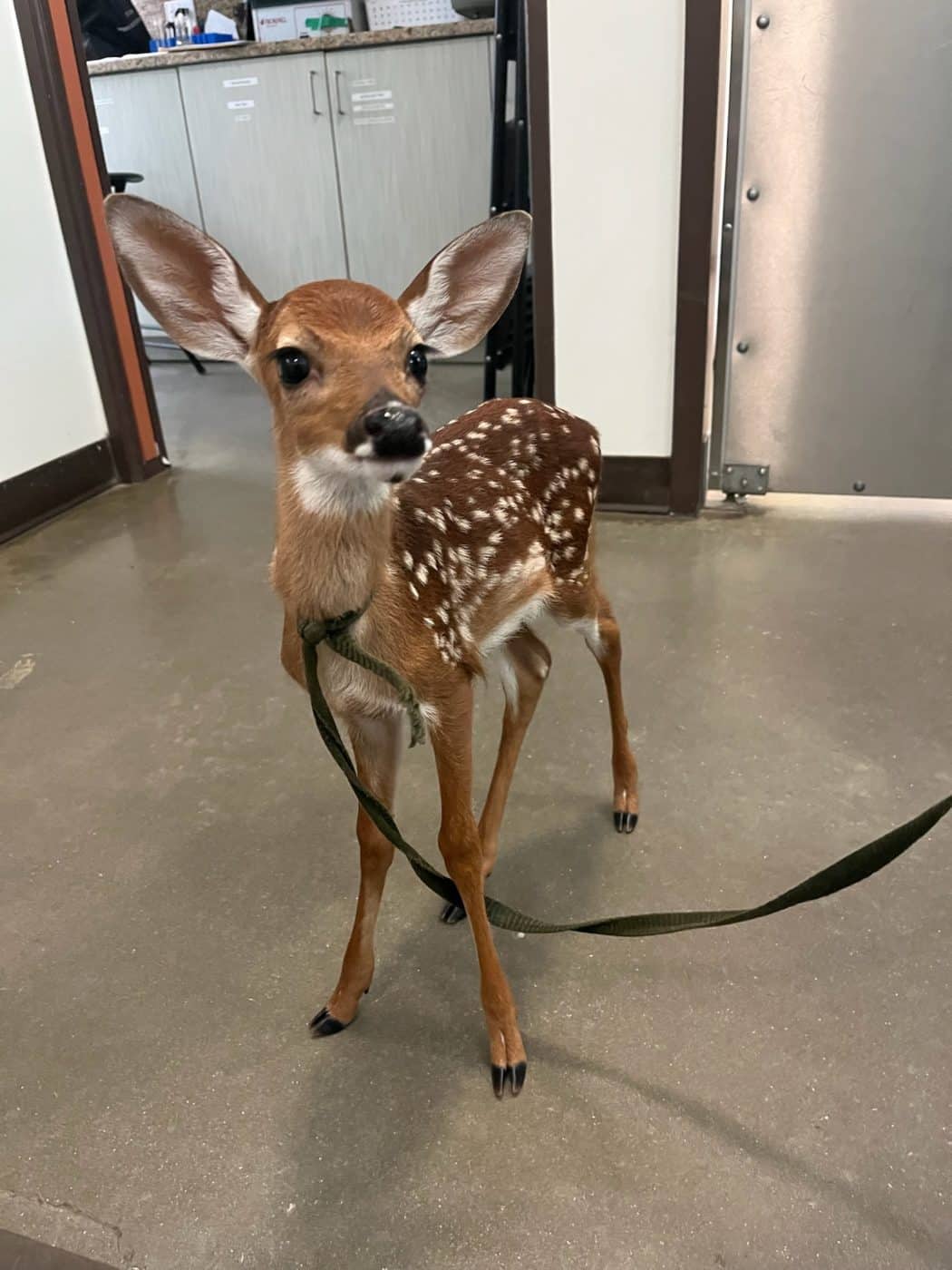
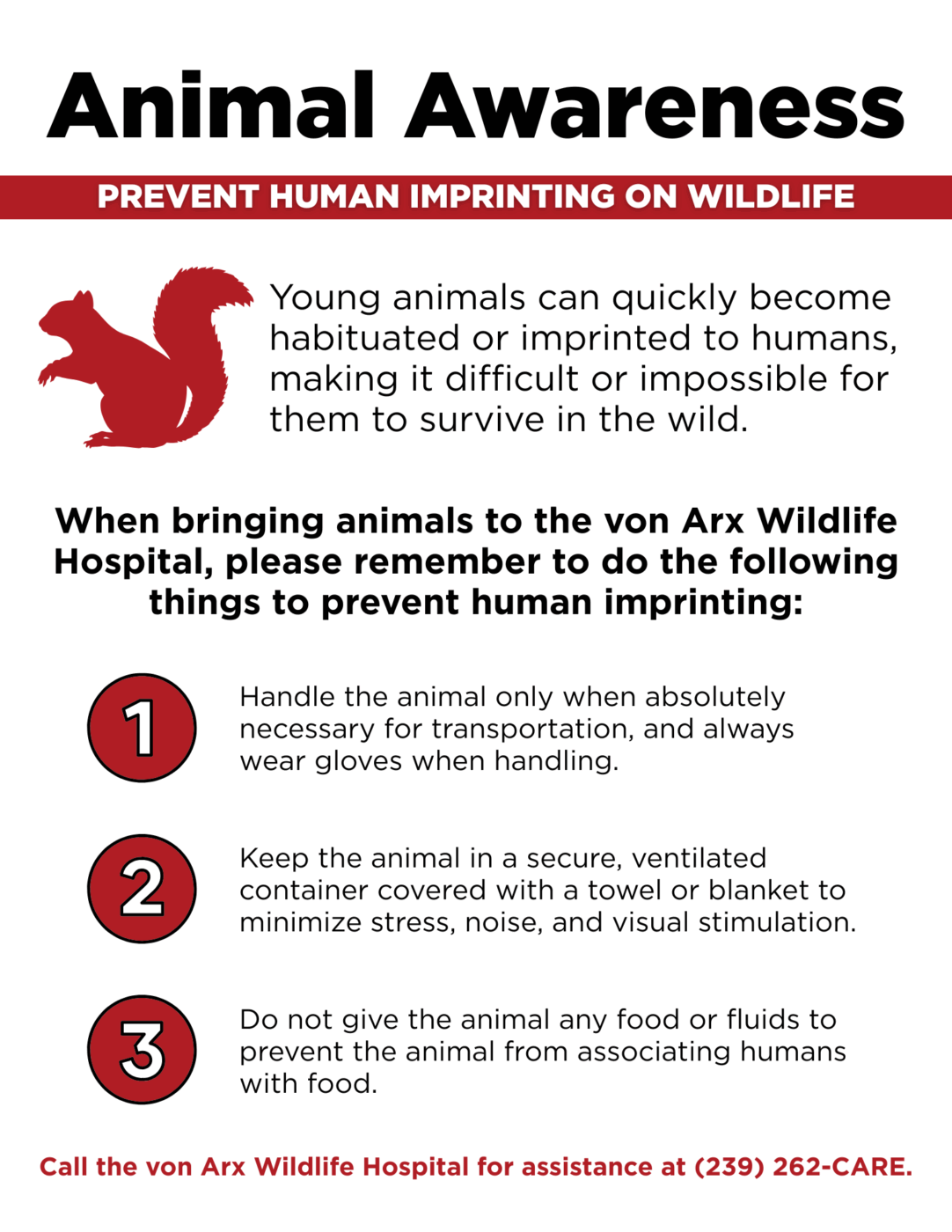
After a full exam, the fawn seemed healthy and was just a little thin. He is currently doing well and will be transferred to another facility to grow up with an adult female deer and other fawns, so that there is a chance of habituation or imprinting.
It is important as wildlife rescuers to always seek professional help when you find an animal. We understand that it takes a kind heart to rescue and we know that most of the time your intentions are pure and wanting to help, but it is not always in the best interest of the animal. The odds of an animal making a full recovery rise exponentially if the animal receives professional medical attention from a wildlife veterinarian and licensed wildlife rehabilitators within the first 24 hours.
Our goal is to assist injured, sick and orphaned animals so, when healthy, they can be returned to the wild. For more information on wildlife permits and licenses, please visit FWC permit section.