

Written By Kathy Worley, Senior Biologist – Coastal Ecology
Another sea turtle season is winding down and it has been a stellar year for our four-flippered friends. I was out on the beach this past Saturday on North Keewaydin Island to see how our 5 remaining nests were doing. I had one nest that was due to be excavated, so that we can evaluate nesting success. I removed a cage that sits over the nest with my scientific instrument called a shovel and dug down to the nest like a dog looking for a bone, although the dog would probably be move efficient, since I was just using my hands.
Then came the biological work. You count eggshells to see how many hatched, and see how many eggs did not hatch. Then you put on a pair of gloves and hold your nose (if the eggs are rotten) and try to figure out what point in time the eggs stopped developing. If you are lucky, the unhatched eggs were undifferentiated (not fertilized) and just look like egg yolk (those don’t smell so bad). If you are not lucky, well, let’s just say that it is like smelling the worst rotten egg in your life. The things I do for science!
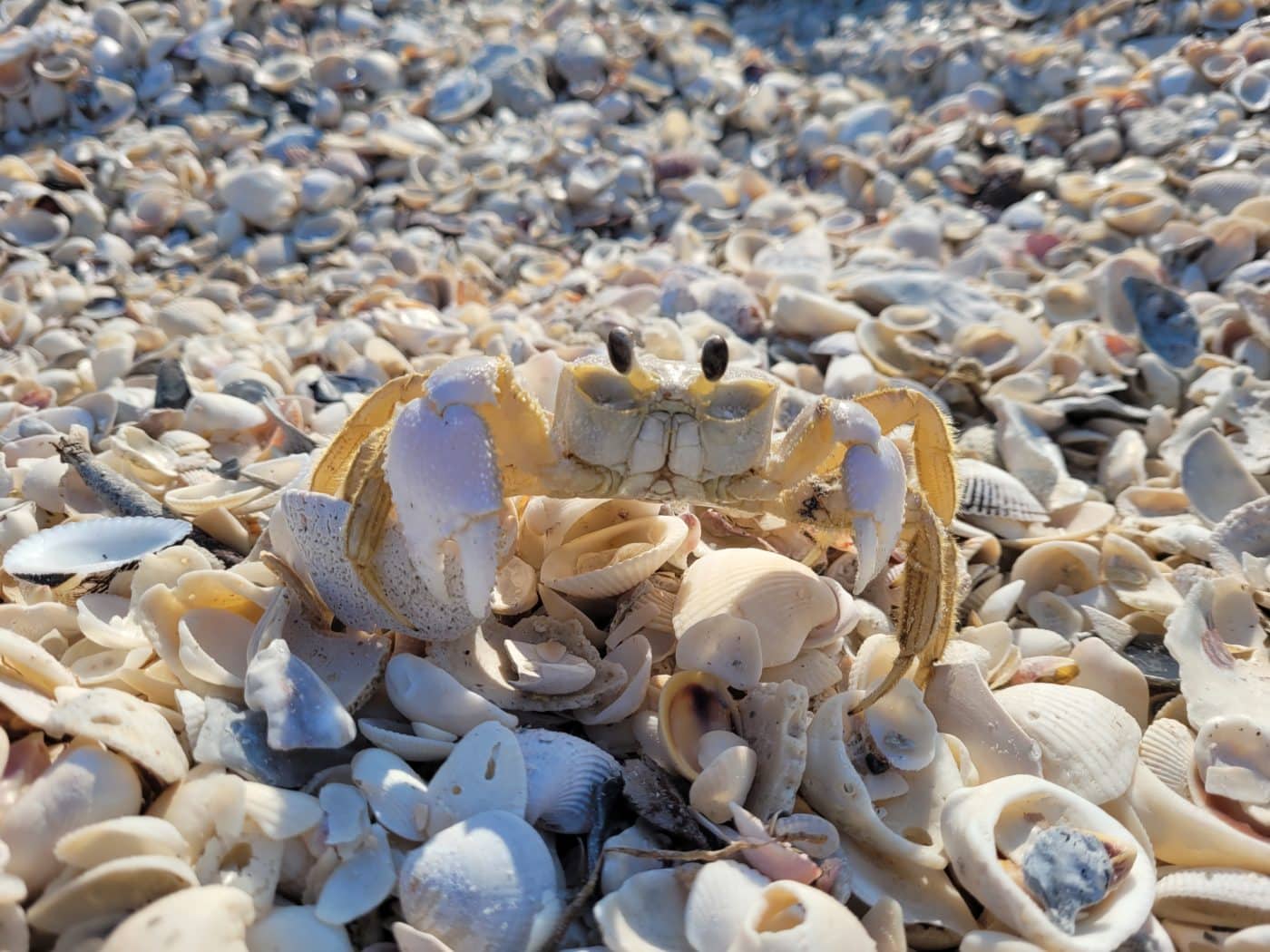
Each nest you assess is kind of like a ticking time bomb. You never know if you will be fortunate and all the eggs hatch, semi-fortunate where the eggs that didn’t hatch were undifferentiated, or it was your time to deal with the bomb, a nest of rotten eggs. Today, the nest I dug up fell into the semi-fortunate category sort of… I have to qualify it, because as I was digging down to the nest a ghost crab exploded out of the hole I was digging and hit me in the face. Needless to say, I fell back on my rear and swatted the heck out of that sneaky critter. I guess I can’t blame him, since I interrupted his lunch of unhatched turtle eggs and he had quite a buffet going on prior to my unscheduled visit.
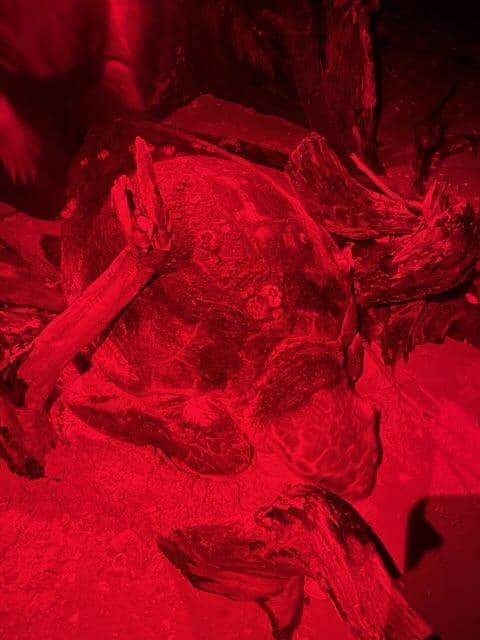
The stretch of beach I was monitoring is north of old Johns Pass that reopened approximately 9,000 ft south of Gordon Pass from the rest of Keewaydin Island during Hurricane Ian. This small area has been very productive for sea turtle nesting even though parts of it look like a petrified forest of Australian pine stumps that sea turtles somehow negotiate to nest. These stumps have managed to trap an occasional female in their grasp, but we are there to help them out of the mess they got themselves into. It is always interesting trying to get a 300 lb. sea turtle to back up for you so you can get them free. Sometimes it’s as easy as pushing on their front carapace (shell) and they get the hint and back up, other times they won’t budge and then you have to break out the saw to cut them an escape route. It’s never easy, those petrified stumps and branches are hard as rocks and I have broken many saw blades trying to cut through them. Eventually I win, but not until I have blisters on my hands and my arm feels like it’s about to fall off. Luckily, these entanglement issues are rare or I would need to go work out at the gym more, to get bulked up for more sawing exercises.
Stay tuned for more field stories. See our sea turtle dashboard data here.