
A bill passed last legislative session focused on emergency response, including hurricane recovery, is causing local governments to worry their hands may be tied when it comes to making smart policy decisions, not only for building local resilience to extreme weather and climate impacts, but for a variety of other necessary purposes.

The legislation, Senate Bill (SB) 180, was aimed at emergency response, especially hurricane recovery. But two specific provisions introduced late in the normal bill-shaping process within the Florida legislature are driving that concern.
Both provisions introduce a chokehold on local government’s ability to introduce any changes that could be considered “more restrictive or burdensome” to their comprehensive plans and land development codes. Comprehensive plans are essentially living guidebooks that outline a vision for how a community will use and manage its land – including natural resources – currently and in future years. (To dig a little deeper, check out 1000 Friends of Florida’s short report explaining “Florida’s Community Planning Process.”) Land development codes or regulations are the specific rules/laws designed to help enact that vision.
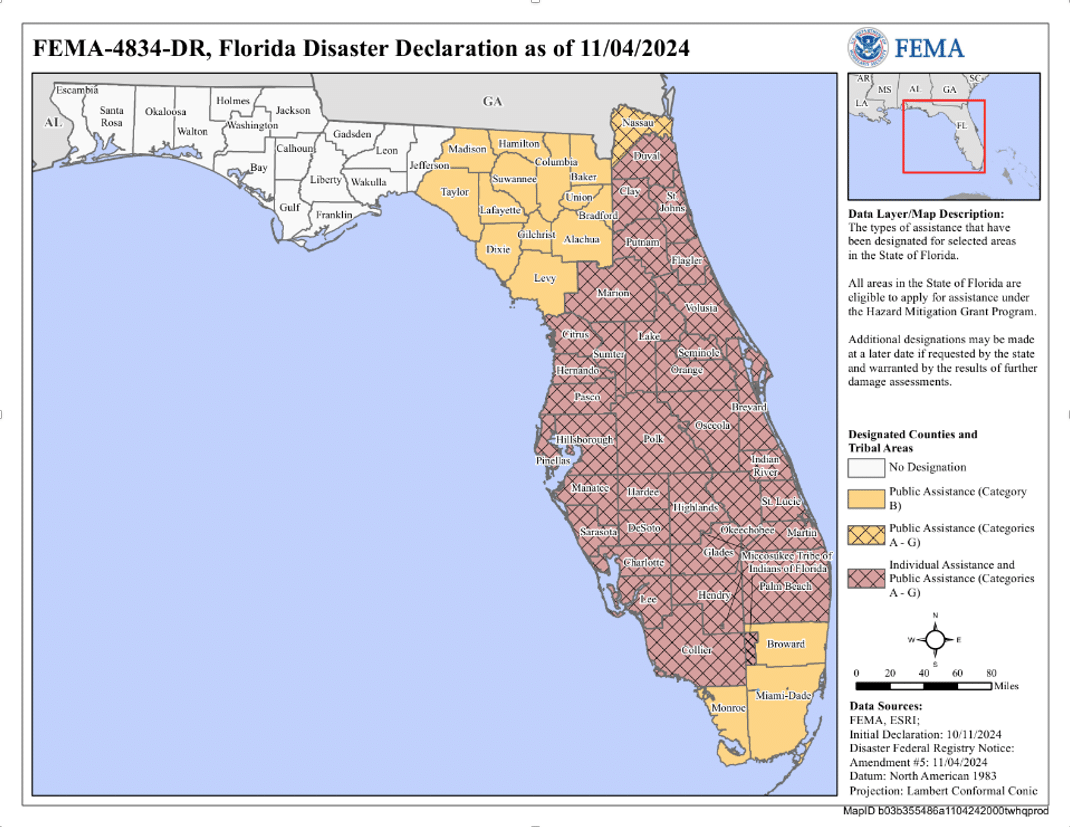
The first provision to highlight, section 28, is more limited in the time period it applies to. It bars local governments within counties that were listed in Federal Disaster Declarations for recent Hurricanes Debby, Milton, and Helene (essentially the entirety of the state) from making the aforementioned comp plan and land development code changes until October of 2027. This section is also retroactive to changes made since August 1 of 2024.
The other, Section 18, projects this idea forward, banning these changes for a year for any County appearing in a future federal disaster declaration that puts them fully or partially within 100 miles of a hurricane storm track. Given that we likely will continue to see increased trends in hurricane severity, likelihood of rapid intensification, and other potentially impactful characteristics, this language has the potential to regularly apply to much of the state.
So why do these two provisions matter, and how could they affect our local area?
While on its face, the language in SB 180 might appear to help people rebuild after storm damage without being subject to new building requirements, it is likely putting home and property owners at risk of repeated future damage and financial loss. The language further means that holistic local government planning for the future, including reducing flooding risks, can be called into question – a scenario that has already played out for Orange County’s Vision 2050 Plan.
The Conservancy is concerned that this can impact adopting smart and layered resilience strategies – including leveraging the protective power of nature – that positively contribute to our local economy and quality of life in Southwest Florida.
The broadness of the language prohibiting any comp plan and land use rule that is “more restrictive and burdensome” can and is also having ripple effects far afield from just resilience applications. Orange County is facing potential legal threats around its adopted rural boundary amendment, passed last year and approved by 73% of voters. The Myakka Management Coordinating Council’s recent request for better protections for the Myakka River from the Manatee County Commission has been stymied by the bill.
We applaud the recent thoughtful conversations and decisions our Naples City Council members have made regarding both the continued erosion of home rule and opposing the damaging provisions passed as part of SB 180. The Conservancy, along with a multitude of our partners, will advocate for the repeal of the problematic sections of SB180, Sections 18 and 28.
For further information, please see some informative work from one of our partners, 1000 Friends of Florida: